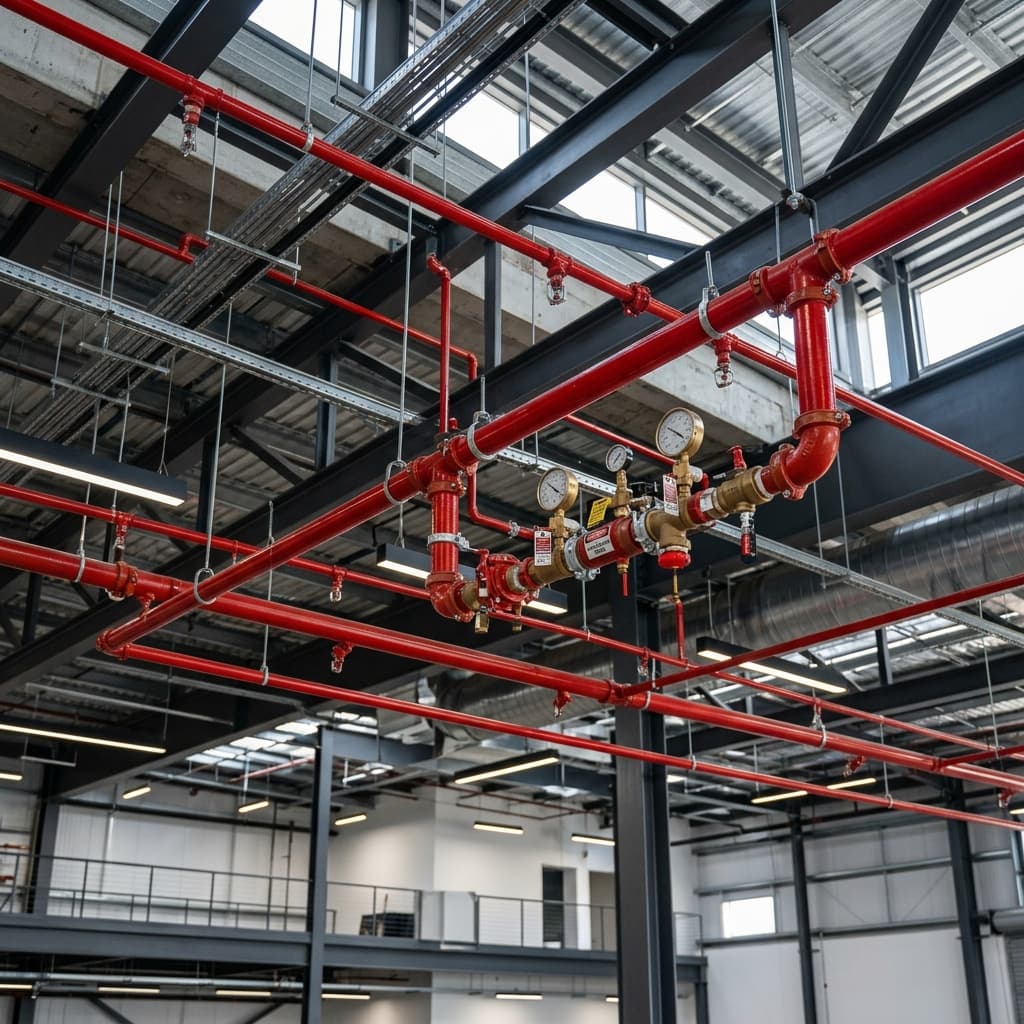
Fire prevention and suppression systems are the first line of defense for protecting lives, followed by property and facilities. Designing these systems cannot be left to guesswork — it relies on precise hydraulic calculations and engineering standards (such as NFPA codes and the local building code) to ensure their effectiveness in critical moments.
Fire protection system design is typically divided into three main categories:
The most common systems, including:
Used in areas where water could damage equipment, such as data centers and electrical rooms. These systems rely on specialized gases like FM-200 to extinguish fires without leaving residue.
Obtaining clearance from the General Directorate of Civil Defense (or similar regulatory bodies) is a fundamental requirement before any commercial, industrial, or even some large residential facilities can be occupied.
Building owners need to have their plans reviewed through licensed engineering offices (safety offices) to ensure compliance with municipal and Civil Defense code requirements. Well-prepared engineering drawings — such as defining escape routes and pump room locations — help reduce review comments and facilitate the licensing process.
When preparing fire protection drawings, the specialized engineer:
Investing in reliable, well-engineered fire protection system design is an essential step toward meeting safety requirements. Utilizing BIM coordination and clash detection ensures that fire sprinkler lines and smoke ducts never collide with concrete beams, speeding up Civil Defense approvals. Discover our full BIM Modeling Services and MEP Design Services to safeguard your approvals and enhance safety.
Contact Studio 360 today for an accurate project quote, with professional engineering delivery aligned with your project scope and requirements.
Request a Quote